

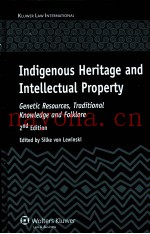
INDIGENOUS HERITAGE AND INTELLECTUAL PROPERTY:GENETIC RESOURCESPDF电子书下载
其他书籍
- 作 者:TRADITIONAL KNOWLEDGE AND FOLKLORE SECOND EDITION
- 出 版 社:WOLTERS KLUWER
- 出版年份:2008
- ISBN:9041124926
- 页数:536 页
图书介绍: 查看图书目录点击购买PDF全本电子书 上一篇:PERCEPTION下一篇:OTOLARYNGOLOGY HEAD AND NECK SURGERY SECOND EDITION UPDATE 1 《INDIGENOUS HERITAGE AND INTELLECTUAL PROPERTY:GENETIC RESOURCES》目录 标签:
Part Ⅰ. Introduction&Silke von Lewinski1
Part Ⅱ. Indigenous Peoples, Indigenous Knowledge and Indigenous Resources in International Law&Peter-Tobias Stoll and Anja von Hahn7
Section 1. Indigenous Peoples in International Law7
Section 2. Indigenous Peoples: Definition Issues10
Ⅰ. The Term ‘Indigenous’: An Approximation11
Ⅱ. The Recognition of Indigenous Peoples as ‘Peoples’15
Section 3. Some Essential Characteristics of Indigenous Cultures17
Ⅰ. Collective Rights17
Ⅱ. Indigenous Peoples and Their Land18
Ⅲ. Indigenous Heritage: Indigenous and Traditional Resources19
Section 4. Relevant Human Rights Norms in the Context of Indigenous Knowledge and Indigenous Resources21
Ⅰ. General Human Rights Norms Relevant to the Protection of Indigenous Knowledge and Indigenous Resources21
1. Human Rights Standards for the Protection of Intellectual Property21
2. Other Relevant Standards in the Context of Indigenous Resources and Traditional Knowledge23
Ⅱ. Specific Human Rights Instruments for the Protection of Indigenous Peoples24
1. ILO Convention No. 16925
2. Draft Declaration on the Rights of Indigenous Peoples26
3. The Proposed American Declaration29
Section 5. Indigenous Peoples in International Environmental Law30
Ⅰ. The Convention on Biological Diversity31
1. ‘Indigenous and Local Communities’32
2. The General Concept32
(a) Dependence of Indigenous and Local Communities on Biological Resources32
(b) The Concept of Benefit-Sharing32
3. Art. 8(j) of the CBD as the Key Operative Provision33
(a) Art. 8(j) in Context: in situ Conservation of Biological Diversity as a State Obligation and the National Law Limitation34
(b) Subject and Contents34
Section 6. Ongoing Discussions: Recent Developments in International Forums Regarding Indigenous Resources and Traditional Knowledge35
Ⅰ. The World Intellectual Property Organization36
Ⅱ. Traditional Knowledge in the Context of the WTO37
Ⅲ. The Convention on Biological Diversity38
Ⅳ. The Food and Agriculture Organization of the United Nations: The International Undertaking on Plant Genetic Resources and the Concept of Farmers’ Rights41
1. ‘Farmers’ Rights’ and Indigenous Peoples42
2. The Concept of Farmers’ Rights43
3. Farmers’ Rights, Traditional Knowledge and Intellectual Property43
Ⅴ. The United Nations Conference on Trade and Development44
Ⅵ. The World Health Organization45
Section 7. Recent Developments at the Regional and National Levels with Regard to the Protection of Indigenous Resources and Traditional Knowledge45
Section 8. Statements, Declarations, Charters, Resolutions, and Recommendations by Indigenous Peoples49
Section 9. Conclusion52
Bibliography52
Part Ⅲ. Analysis of Different Areas of Indigenous Resources59
Section 1. Traditional Knowledge&Antony Taubman and Matthias Leistner59
I. Findings at the Factual Level59
1. Recognizing the Characteristics of Traditional Knowledge59
2. Sources of Factual Information64
3. Terms and Definitions68
(a) Choice of Terminology69
(aa) General69
(bb) Addressing Indigenous Knowledge in Particular69
(b) Subject Matter to be Covered: Characterizing Traditional Knowledge71
(aa) Holistic Approach71
(bb) Diversity72
(cc) Self-Referential Aspect of Defining TK73
(dd) The Role of a Definition of TK74
(ee) Linkage with Traditional Community and Dynamic, Intergenerational Quality77
(c) Scope of Legally Protected TK78
4. TK and IP Protection in an Holistic Context81
5. Needs and Expectations for the Protection of Traditional Knowledge82
(a) Positive Protection83
(b) Defensive Protection85
6. The Focus on the Point of Access87
(a) General87
(b) Initiatives for Documentation Measures Advantages and Disadvantages87
7. The Role of Customary Law89
8. Use of Certification and Collective Marks and Geographical Indications90
Ⅱ. Existing Legal Provisions Regarding the Protection of Traditional Knowledge92
1. TK as Subject Matter for Intellectual Property Rights92
(a) International Level92
(aa) Patents93
(1) Positive Protection of TK Innovations through the Patent System95
(ⅰ) TK as Inherent Subject Matter for Patent Protection95
(ⅱ) Cultural and Legal Constraints on Use of Patent System by TK Holders97
(ⅲ) Inventorship in a Traditional Context97
(ⅳ) Application of Patentability Standards in the Context of TK Systems100
(2) Defensive Protection in the Patent System: the PCT and IPC104
(ⅰ) Recognition of TK in the Patent System104
(ⅱ) Internationa] Patent Classification104
(ⅲ) Patent Cooperation Treaty104
(ⅳ) WIPO Recommendations on the Recognition of TK105
(ⅴ) The Dilemma of Pyrrhic Protection106
(bb) Geographical Indications and Certification Marks107
(cc) Suppression of Unfair Competition109
(dd) Sui Generis Protection111
(b) Regional Level113
(aa) Andean Community113
(bb) European Patent Convention114
(1) Novelty and Inventive Step under the EPC114
(2) Cases on Patenting TK-Related Inventions115
(cc) Regional Models for Protection120
(dd) Bilateral Agreements120
(c) National Level121
(aa) Patent Law121
(1) General Considerations and Some Cases: TK under National Patent Law121
(2) Positive Protection of TK under National Law123
(3) Defensive Protection of TK against Illegitimate Patenting124
(ⅰ) Per se Exclusions of TK from Patentability under National Law124
(ⅱ) Enhanced Disclosure Mechanisms under National Law126
(bb) Trademarks, Public Certification Systems and Geographical Indications127
(1) Collective Marks and Certification Marks (Annette Kur)127
(2) Public Certification Systems (Annette Kur)129
(3) Geographical Indications (Roland Knaak)130
(4) Conclusions (Annette Kur)131
(5) Related Regulation132
(cc) Trade Secrets and Confidential Information132
(dd) Recognition of Customary Law in National IP Laws134
(ee) Sui Generis Protection of TK under National Law136
(1) General136
(2) Objectives of Sui Generis Protection138
(3) Legal Basis for Protection140
(4) Forms of Knowledge Protected141
(5) Beneficiaries of Protection143
(6) Manner of Protection144
(ⅰ) Prior Informed Consent144
(ⅱ) Exclusive Rights145
(ⅲ) Domaine Public Pay ant147
(7) Registration148
(8) Recognition of Customary Law149
2. Forms of Legal Protection beyond Intellectual Property at the International Level151
(a) Convention on Biological Diversity151
(b) FAO International Treaty154
(c) International Covenant on Economic, Social and Cultural Rights155
Ⅲ. Draft Laws and Other Models156
1. International Level156
(a) WIPO Draft Sui Generis Protection against Misuse and Misappropriation of TK and Related WIPO Developments156
(aa) Draft Provisions156
(b) Related Developments159
(c) Convention on Biological Diversity162
(d) WTO TRIPS Council165
(e) Customary Law in International Instruments169
(f) UN Declaration on the Rights of Indigenous Peoples171
2. Draft Sui Generis Models at the Regional Level172
Ⅳ. Conclusions173
Section 2. Genetic Resources&Antony Taubman181
Ⅰ. Introduction181
1. Unity in Biological Diversity? The Challenges of Regulating Genetic Resources181
2. The New Legal and Policy Environment for Genetic Resources185
3. Valuing Genetic Resources187
(a) Genetic Resources as a Public Good187
(b) Diverse Value Systems and Genetic Resources188
(c) Biotechnology Patents as Means of Realizing Value190
Ⅱ. Findings at the Factual Level192
1. The Framework for Factual Findings: Genetic Diversity and Modern Biotechnology192
(a) The Empirical Framework for Review of Genetic Resources192
(b) Genetic Diversity and a Common Technology Platform193
(c) Innovation through Transgressing Species Boundaries194
(d) The Policy Implications of Genetic Diversity196
2. Unity and Diversity in the Regulation of Genetic Resources198
(a) Mapping Regulatory Regimes to Forms of Genetic Resources198
(b) The Distinctness of the Human Genome201
3. The Interface between Intellectual Property and Genetic Resources205
Ⅲ. Existing Legal Provisions Relevant to Genetic Resources217
1. Genetic Resources as the Subject of Intellectual Property217
2. Overview of Current Questions221
3. Intellectual Property Instruments222
(a) International Level222
(aa) International IP Law in Context222
(bb) The TRIPS Agreement225
(cc) The Budapest Treaty229
(dd) Plant Breeders’ Rights230
(b) Regional and National Levels236
(aa) The Distinction between ‘Naturally Occurring’ and ‘Isolated’ Genetic Material236
(bb) Valuing the Pathway from the Genetic Resource to the Product or Valuing the Product?238
(cc) Overview of the Issues in Patenting Genetic Material240
(dd) Defensive Measures in National and Regional Patent Law242
(1) A Priori Exclusions243
(2) Conditional Exclusions245
4. Non-intellectual Property Instruments249
(a) International Level249
(aa) Genetic Resources as National Property and the Eclipse of the Common Heritage249
(bb) Convention on Biological Diversity252
(1) Central Principles252
(2) The CBD Objectives and Intellectual Property254
(ⅰ) Sovereignty over Genetic Resources255
(ⅱ) Retroactivity256
(ⅲ) Diffusion of Genetic Resources and Scop of Sovereignty257
(ⅳ) Prior Informed Consent257
(ⅴ) Equitable Benefit Sharing259
(ⅵ) Transfer of Technology262
(3) Food and Agricultural Organization: International Treaty269
(b) National and Regional Levels273
Ⅳ. Draft Laws and Other Models277
1. Tailored Patent Disclosure Mechanisms for Genetic Resources277
2. CBD Bonn Guidelines281
3. CBD International Regime283
4. FAO: Standard Material Transfer Agreement284
5. WIPO – Guidelines on Access and Benefit-sharing286
V. Conclusions288
Section 3. Protection of Traditional Names and Designations&Annette Kur and Roland Knaak293
Ⅰ. Findings at the Factual Level293
Ⅱ. Existing Legal Provisions Regarding the Protection of Traditional Names and Designations296
1. Intellectual Property Rights296
(a) International Level296
(aa) Trademarks296
(1) Overview296
(bb) Geographical Indications301
(cc) Unfair Competition308
(b) Regional Level308
(aa) Trademarks308
(1) The Community Trademark System308
(2) Other Regional Systems310
(bb) Geographical Indications310
(1) EC Regulation 2081/92310
(2) Georgraphical Community Collective Marks312
(c) National Level313
(aa) Trademarks313
(1) Absolute Grounds for Refusal314
(ⅰ) Lack of Distinctive Character314
(ⅱ) Deceptive Marks316
(ⅲ) Offensive Marks317
(ⅳ) Registration in Bad Faith320
(ⅴ) Signs Excluded from Registration321
(2) Relative Grounds for Refusal322
(3) Rights in the Case of Successful Registration323
(4) Domain Names324
(5) Misrepresentation327
(bb) Geographical Indications328
(1) Registration System328
(2) Authorizing Procedures328
(3) No Formalities329
(4) Trademark Law – Grounds for Refusal330
(5) Geographical Collective or Certification Marks331
2. Outside Intellectual Property332
Ⅲ. Draft Laws and Other Models332
Ⅳ. Conclusions332
1. General Remarks332
2. Solutions for Improved Protection333
(a) Exemptions from the Country of Protection Principle333
(b) Need for Improvement of Informational Infrastructure334
(c) Measures at the National Level334
(d) Prior Rights335
Bibliography335
Section 4. Folklore&Agnes Lucas-Schloetter339
Ⅰ. Findings at the Factual Level339
1. The Commercial Value of Folklore340
2. The Different Forms of Exploitation of Folklore341
3. The Expectations of Indigenous Peoples with Respect to their Folklore343
4. The Definition of Folklore344
Ⅱ. Existing Legal Regimes Regarding the Protection of Folklore350
1. Intellectual Property Rights350
(a) International Level350
(aa) Copyright350
(1) The Berne Convention350
(2) The TRIPS Agreement and the WCT353
(bb) Neighbouring Rights354
(1) The Performer’s Neighbouring Rights354
(2) The Neighbouring Right of the Producer of Phonograms356
(cc) The International Conventions concerning Industrial Property and Unfair Competition357
(b) Regional Level359
(aa) Europe359
(1) The European Directives in the Field of Copyright and Neighbouring Rights359
(2) The European Directives in the Field of Industial Property361
(bb) The Americas361
(1) The North American Free Trade Agreement361
(2) The Cartagena Agreement361
(3) MERCOSUR363
(4) The Central American Convention on the Protection of Industrial Property364
(cc) Africa364
(1) Annex Ⅶ concerning Copyright365
(ⅰ) Annex Ⅶ in the 1977 Version365
(ⅱ) Annex Ⅶ in the 1999 Version367
(2) The Annexes concerning Industrial Property368
(dd) Pacific Islands369
(c) National Level370
(aa) Protection on the Basis of Copyright370
(1) Classification of National Copyright Legislation371
(ⅰ) National Legislation with no Reference to Folklore371
(ⅱ) National Legislation Expressly Excluding Folklore from its Scope of Application372
(ⅲ) National Copyright Legislation Granting Direct Protection to Folklore373
(2) Direct Protection of Folklore via Copyright383
(ⅰ) The Obstacles to Protection of Folklore via Copyright383
(ⅱ) Assessment of the Protection of Folklore by Means of Copyright390
(3) Indirect Protection of Folklore on the Basis of the Rules concerning Collections and Adaptations393
(ⅰ) Collections393
(ⅱ) Adaptations394
(4) Indirect Protection of Folklore on the Basis of Neighbouring Rights397
(ⅰ) The Producer’s Neighbouring Right397
(ⅱ) The Performer’s Neighbouring Right398
(bb) Protection on the Basis of Industrial Property399
(1) Design Law399
(2) Trademark Law400
(3) Geographical Indications406
(4) Unfair Competition407
(cc) Sui Generis Intellectual Property Right411
(1) Panama411
(2) Other Examples413
2. Legal Protection of Folklore outside Intellectual Property413
(a) Customary Law413
(b) Cultural Heritage Legislation420
(aa) International Level420
(1) The 1972 World Heritage Convention and the 2003 Intangible Cultural Heritage Convention420
(2) The 1970 Unesco Convention on Cultural Property422
(3) The 1995 Unidroit Convention424
(bb) Regional Level425
(1) On the Continent of Europe425
(2) On the Continent of the Americas425
(3) On the Continent of Africa426
(cc) National Level428
(c) The Legal Instruments in the Field of Human Rights and the Rights of Indigenous Peoples434
(aa) The Legal Instrument in the Field of Human Rights434
(bb) The Legal Instruments in the Field of Indigenous Peoples’ Rights439
(ⅰ) ILO Convention No. 169439
(ⅱ) The United Nations Human Rights Commission441
Ⅲ. Draft Laws and Other Models445
1. The Tunis Model Law on Copyright (WIPO/UNESCO, 1976)445
2. The Model Provisions for National Laws on the Protection of the Expressions of Folklore against Illicit Exploitation and Other Prejudicial Actions (WIPO/UNESCO, 1982)447
3. Draft Treaty for the Protection of Expressions of Folklore against Illicit Exploitation and Other Prejudicial Actions (WIPO/UNESCO, 1984)451
4. Draft Declarations in the Field of Indigenous Peoples’ Rights453
(a) The Draft Declaration on the Rights of Indigenous Peoples453
(b) Draft Principles and Guidelines on the Heritage of Indigenous Peoples456
(c) Draft Regional Declarations on the Rights of Indigenous Peoples458
5. Draft National Legislation459
6. WIPO Intergovernmental Committee on Intellectual Property and Genetic Resources, Traditional Knowledge and Folklore – Revised Provisions for the Protection of Expressions of Folklore: Policy Objectives and Core Principles460
7. OAPI/ARIPO Draft Legal Instrument on the Protection of Expressions of Folklore467
8. The Initiatives of Various Semi-Official and Unofficial Groups in the Field of the Protection of Folklore469
(a) International Level469
(b) Regional Level474
(c) National Level: The Example of Australia476
(aa) Report of the Working Party on the Protection of Aboriginal Folklore (1981)476
(bb) Report of the Committee of the Inquiry into Folklife in Australia (1987)477
(cc) Stopping the Rip-offs (1994)478
(dd) Our Culture, Our Future (1997)478
Ⅳ. Conclusions480
Bibliography485
Part Ⅳ. Final Considerations&Silke von Lewinski507
Section 1. Preliminary Remarks507
Section 2. The Needs as Expressed by Indigenous Peoples508
Section 3. Protection by Existing Intellectual Property Regimes509
Ⅰ. Protection of Genetic Resources, Traditional Knowledge and Folklore Per Se509
Ⅱ. Protection of ‘Derivates’512
1. ‘Derivates’ Produced by Indigenous Peoples513
2. ‘Derivates’ Produced by Outsiders513
(a) Opposition to Intellectual Property Rights of Outsiders of Indigenous Communities513
(b) Possible Responses to Claims for Defensive Protection514
Section 4. Protection of Genetic Resources, Traditional Knowledge and Folklore by Legal Regimes beyond Classical Intellectual Property515
Ⅰ. Customary Law516
1. Problematic Issues516
2. Basic Approaches517
Ⅱ. Sui Generis Protection as a Means to Respond to Specific Needs518
1. Holders of Rights519
2. Object of Protection and Uses Covered520
3. Other Issues521
4. Objections to Sui Generis Protection: Public Domain521
5. Selected Practical Aspects of Legal Protection: Databases and Collecting Societies524
(a) Databases524
(b) Collecting Societies525
Section 5. The Level of Legal Measures526
Section 6. Additional Instruments527
Section 7. Practical Measures528
Bibliography528
Index531
相关图书
作者其它书籍
- 《女丹仙道:道教女子内丹养生修炼秘籍 下》董沛文着 2012
- 《中风偏瘫 脑萎缩 痴呆 最新治疗原则与方法》孙作东着 2004
- 《断陷湖盆比较沉积学与油气储层》赵永胜等着 1996
- 《看天的男孩》蓝戈着 1993
- 《高考快速作文指导》张吉武,鲍志伸主编 2002
- 《电子测量与仪器》人力资源和社会保障部教材办公室组织编写 2009
- 《水面舰艇编队作战运筹分析》谭安胜着 2009
- 《建筑施工企业统计》杨淑芝主编 2008
- 《幼儿园游戏 规则性游戏》徐仁吉编 1951
- 《家畜百宝 猪、牛、羊、鸡的综合利用》山西省商业厅组织技术处编着 1959
出版社其它书籍
- 《KLUWER LAW INTERNATIONAL SPARES》REPAIRS AND INTELLECTUAL PROPERTY RIGHTS IEEM INTERNATIONAL INTELLECTUAL PROPERTY PROGRAMMES 2009
- 《KLUWER LAW INTERNATIONAL ENERGY LAW IN PERU》JOSE ANTONIO HONDA 2010
- 《KLUWER LAW INTERNATIONAL SPORTS LAW IN SOUTH AFRICA》ANDRE M.LOUW 2010
- 《KLUWER LAW INTERNATIONAL ENERGY LAW IN FINLAND》KIM TALUS ALICE GUIMARAES-PUROKOSKI等等 2010
- 《THE WOLTERS KLUWER BOUVIER LAW DICTIONARY COMPACT EDITION》STEPHEN MICHAEL SHEPPARD 2011
- 《KLUWER LAW INTERNATIONAL INTELLECTUAL PROPERTY LAW IN ARGENTINA》GUILLERMO CABANELLAS 2010
- 《KLUWER LAW IN TERNATIONAL CYBER LAW IN HUNGRAY》BALAZS RATAI PETER HOMOKI 2010
- 《KLUWER LAW INTERNATIONAL SPORTS LAW IN ITALY》MICHELE COLUCCI 2010
- 《KLUWER LAW INTERNATIONAL RELIGION AND LAW IN GERMANY》GERHARD ROBBERS 2010
- 《KLUWER LAW INTERNATIONAL THE CIVIL CODE OF THE NETHERLANDS》HANS WARENDORF RICHARD THOMAS LAN CURRY-SUMNER 2009
本类热门
- 1变通 受用一生的学问
- 2额尔古纳河右岸
- 3易经真的很容易
- 4海蒂怀孕大百科 全新第4版
- 5八次危机 中国的真实经验1949-2009
- 6法治的细节
- 7你是你吃出来的
- 8蛤蟆先生的希望
- 9杀死一只知更鸟
- 10天幕红尘
摘要:本文以“INDIGENOUS HERITAGE AND INTELLECTUAL PROPERTY:GENETIC RESOURCES.pdf电子书版文档下载”为中心,从四个方面对遗传资源在知识产权保护中的地位和作用进行了深入探讨。文章首先概述了遗传资源的概念和重要性,接着分析了遗传资源在知识产权保护中的挑战和机遇,最后提出了相应的保护策略和建议。
1、遗传资源的概念与重要性
遗传资源是指自然界中存在的生物多样性及其组成部分,包括植物、动物、微生物等。这些资源对于人类社会的经济发展、生态平衡和人类健康具有重要意义。然而,随着生物技术的快速发展,遗传资源的利用和保护问题日益凸显。本文首先对遗传资源的概念进行了阐述,并分析了其在知识产权保护中的重要性。
遗传资源是生物多样性的基础,对于维护生态平衡、保护生物多样性具有重要意义。同时,遗传资源是生物技术产业的重要原料,对于推动医药、农业等领域的发展具有重要作用。因此,加强对遗传资源的知识产权保护,有助于促进遗传资源的合理利用和可持续发展。
此外,遗传资源还涉及到民族文化和传统知识,对于保护民族遗产和文化多样性具有重要意义。因此,在知识产权保护中,应充分考虑遗传资源的多样性和文化价值。
2、遗传资源在知识产权保护中的挑战
遗传资源在知识产权保护中面临着诸多挑战。首先,遗传资源的获取和利用过程中存在伦理问题,如未经许可的采集、利用和商业化等。其次,遗传资源的知识产权归属不明确,容易引发争议。此外,遗传资源的保护与利用之间存在矛盾,如何在保护遗传资源的同时促进其合理利用,成为知识产权保护的一大难题。
针对这些挑战,本文分析了遗传资源在知识产权保护中的困境,并提出了相应的解决方案。例如,加强国际合作,制定统一的遗传资源获取与惠益分享制度;明确遗传资源的知识产权归属,保护遗传资源持有者的合法权益;建立健全遗传资源保护机制,促进遗传资源的可持续利用。
此外,本文还强调了在知识产权保护中,应充分考虑遗传资源的伦理和文化价值,尊重民族文化和传统知识,实现遗传资源的公平、合理利用。
3、遗传资源在知识产权保护中的机遇
尽管遗传资源在知识产权保护中面临诸多挑战,但同时也存在着巨大的机遇。随着生物技术的快速发展,遗传资源在医药、农业、环保等领域具有广泛的应用前景。在知识产权保护方面,遗传资源的合理利用有助于推动技术创新和产业升级,为经济发展注入新动力。
本文分析了遗传资源在知识产权保护中的机遇,并提出了相应的利用策略。例如,加强遗传资源的基础研究,提高遗传资源的利用价值;推动遗传资源相关产业的创新发展,培育新的经济增长点;加强知识产权保护,激发创新活力,促进遗传资源的合理利用。
此外,本文还强调了在遗传资源利用过程中,应注重知识产权保护与伦理道德的平衡,实现遗传资源的可持续发展。
4、遗传资源知识产权保护的策略与建议
针对遗传资源在知识产权保护中的挑战和机遇,本文提出了相应的保护策略与建议。首先,加强国际合作,推动遗传资源获取与惠益分享制度的建立和完善。其次,明确遗传资源的知识产权归属,保护遗传资源持有者的合法权益。此外,建立健全遗传资源保护机制,促进遗传资源的可持续利用。
在具体实施过程中,应加强遗传资源的知识产权保护意识,提高公众对遗传资源保护的认识。同时,加强遗传资源相关法律法规的制定和实施,为遗传资源的知识产权保护提供法律保障。此外,加强遗传资源保护的国际交流与合作,共同应对遗传资源保护面临的挑战。
总之,遗传资源在知识产权保护中具有重要地位和作用。通过加强知识产权保护,有助于促进遗传资源的合理利用和可持续发展,为人类社会的发展作出贡献。
总结:
本文从遗传资源的概念与重要性、挑战、机遇以及保护策略等方面对“INDIGENOUS HERITAGE AND INTELLECTUAL PROPERTY:GENETIC RESOURCES.pdf电子书版文档下载”进行了详细阐述。通过对遗传资源的深入探讨,本文旨在提高人们对遗传资源知识产权保护的重视程度,为遗传资源的合理利用和可持续发展提供理论支持。
本文的研究成果对于推动遗传资源知识产权保护的理论研究和实践应用具有重要意义。在今后的工作中,我们将继续关注遗传资源知识产权保护的相关问题,为遗传资源的可持续发展贡献力量。
本文由nayona.cn整理

联系我们

关注公众号
 微信扫一扫
微信扫一扫
 支付宝扫一扫